How much cold is a risk in the Central Valley
The National Weather Service reports that Fresno sees lows of 32 degrees or below about 19 times a year on average. Some years have far fewer and some have more. Long cold snaps are rare. That pattern makes freeze damage a surprise, because homeowners do not expect it.
Pipes freeze when the temperature around them stays below freezing long enough to chill the water inside. A single overnight low is often enough for a pipe in an exposed spot.
Where pipes in Valley homes are exposed
Outdoor spigots and hose bibs
A hose left connected can trap water in the faucet and the pipe behind it.
Irrigation backflow assemblies
These sit above ground at many homes and can crack in a hard freeze.
Garage and utility walls
Pipes in uninsulated exterior walls get cold faster than those inside conditioned rooms.
Attics and crawl spaces
Supply lines in vented spaces are exposed to cold air.
Pool and spa equipment
Exposed pumps and plumbing lines can freeze overnight.
Protect pipes before a freeze
- Disconnect garden hoses and cover outdoor faucets with insulated covers.
- Wrap exposed pipes in foam sleeves, especially in garages and crawl spaces.
- Open cabinet doors under sinks on exterior walls so warm air reaches the pipes.
- Let a faucet drip slightly on the coldest nights if a line runs through an exposed wall.
- Know where your main water shutoff is and test that it turns.
A slow drip keeps water moving, and moving water is harder to freeze. The cost of a small drip is far lower than the cost of a burst pipe.
Signs a pipe has frozen
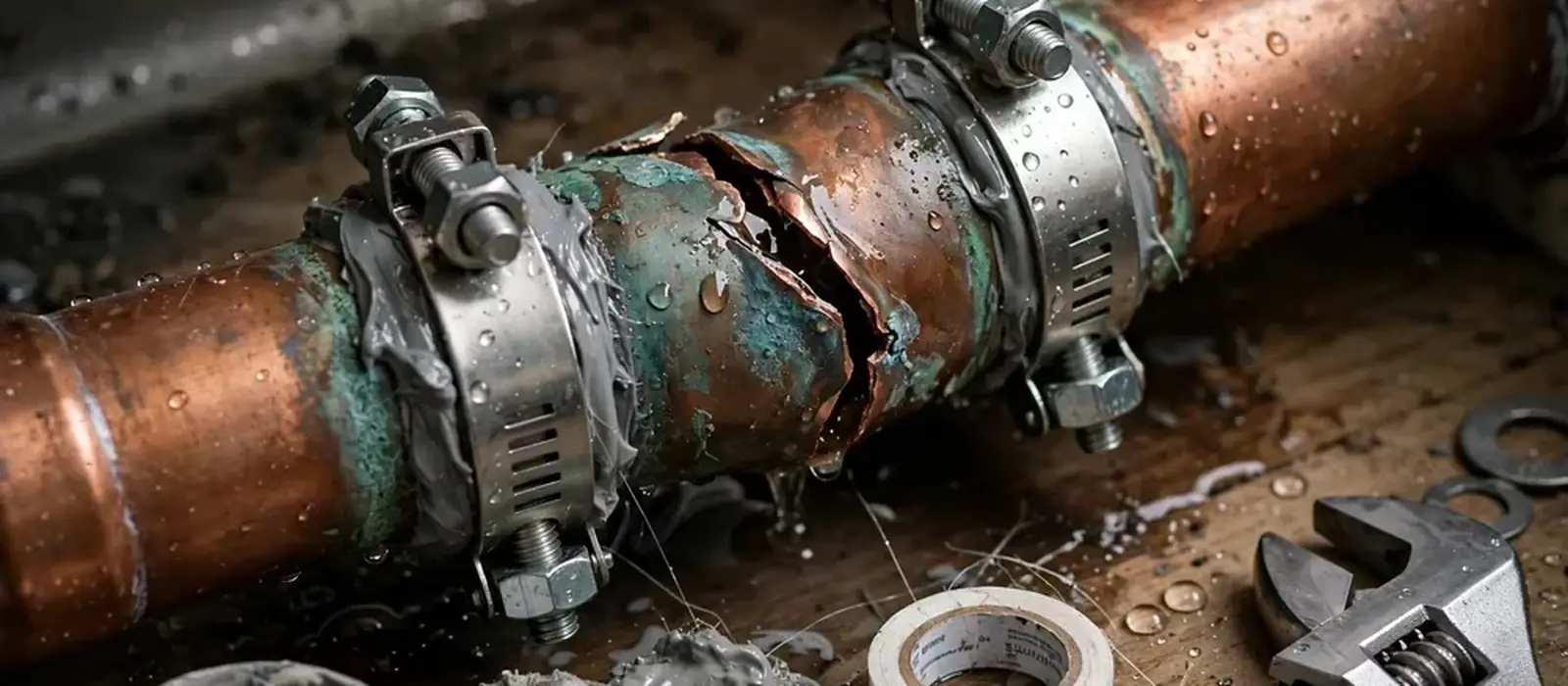
A faucet that gives only a trickle or nothing at all on a cold morning is the classic sign. Frost on an exposed pipe is another. Strange odors from a drain can mean a frozen drain line. A pipe that bulges or shows a crack needs attention quickly because it may split as it thaws.
Thawing is when many pipes leak, since the ice no longer plugs the crack. Check for water as the temperature rises.
Frozen pipe or water where it should not be?
Call the 24/7 line. A dispatcher sends a licensed plumber and you hear the price before work starts.
What to do if a pipe freezes
Shut off the water
Close the main valve so a split pipe cannot flood the house when it thaws.
Open the faucet
Open the tap that the frozen pipe feeds so melting water has somewhere to go.
Warm the pipe slowly
Use a hair dryer on low or warm towels. Never use an open flame, which can start a fire.
If you cannot find the frozen section or if a pipe has cracked, stop and call a plumber. For a pipe that has already split, burst pipe repair covers the next steps.
After the thaw: check for hidden damage
Even a pipe that survives a freeze may have a hairline crack. Watch your water meter with all fixtures off. If it moves, water is leaking somewhere. Walls, floors and ceilings can hide a slow leak for weeks, and the damage grows over time.
Leak detection finds the source without opening the wall first. Pay attention to the water bill and to any new damp smell.
Do not forget your water heater
A water heater in a garage or on an exterior wall can be exposed in a cold spell. Insulating its supply and relief lines helps. If a heater stops working after a freeze, the water heater repair page lists common causes. Never ignore a gas smell. Leave the house and call your gas utility or 911 from outside.
Insulation basics that work
Foam pipe sleeves are inexpensive and snap on in minutes. Cover every exposed section, including the elbows, since heat loss is greatest there. Seal gaps in garage walls and around pipe entries with caulk or spray foam so cold air does not blow across the pipe.
Outdoor faucet covers are a small purchase that prevents cracked spigots. Insulate the first few feet of supply line as it enters the house.
If you are away from home
A cold night while you are on vacation is the worst case, since no one is there to notice. Before you leave in winter, set the thermostat no lower than a moderate temperature, open the cabinet doors on exterior walls and ask a neighbor to check the house. Shutting off the main valve and draining the lines is the safest approach for a long absence.
Know your shutoff before you need it
Find the main valve now, not during a leak. It is often near the street side of the house, at the water meter, or at a hose bib on an exterior wall. Turn it off and on once to see that it moves. A stuck valve needs replacing before it fails in an emergency, and the plumber can swap it during an ordinary visit. See water line repair if the line itself is damaged.
Freeze risk in Sanger
Sanger sits in the Central Valley, where winter has two quirks. First, tule fog settles in from late November to mid February, and the dense, cold air can linger for days. Second, clear nights after a storm bring the sharpest drops in temperature. Both can chill pipes that are not insulated.
Many Sanger homes are older. The city's housing element reports that about 29 percent of homes are more than 50 years old, and older homes often have less insulation around plumbing. Homeowners in Fowler and Kingsburg share the same winter pattern, so a hard freeze that hits one town often hits all of them.
Where this advice comes from
Freeze counts here come from the National Weather Service, according to the climate summary for the Fresno area, and the pipe protection tips follow common plumbing guidelines on insulation and shutoff access.
FAQFrequently asked questions
Yes, on some nights. The National Weather Service reports about 19 freezing nights a year in Fresno on average. Pipes that are exposed outdoors or in unheated spaces are most at risk.
On the coldest nights, a slow drip on faucets fed by exposed lines helps. It is not needed on every cool night.
Shut off the main valve, switch off electricity near standing water if you can do it safely and call the 24/7 line. Take photographs for your records.
Coverage depends on your policy. Ask your insurer, and keep receipts and photographs of the damage.