
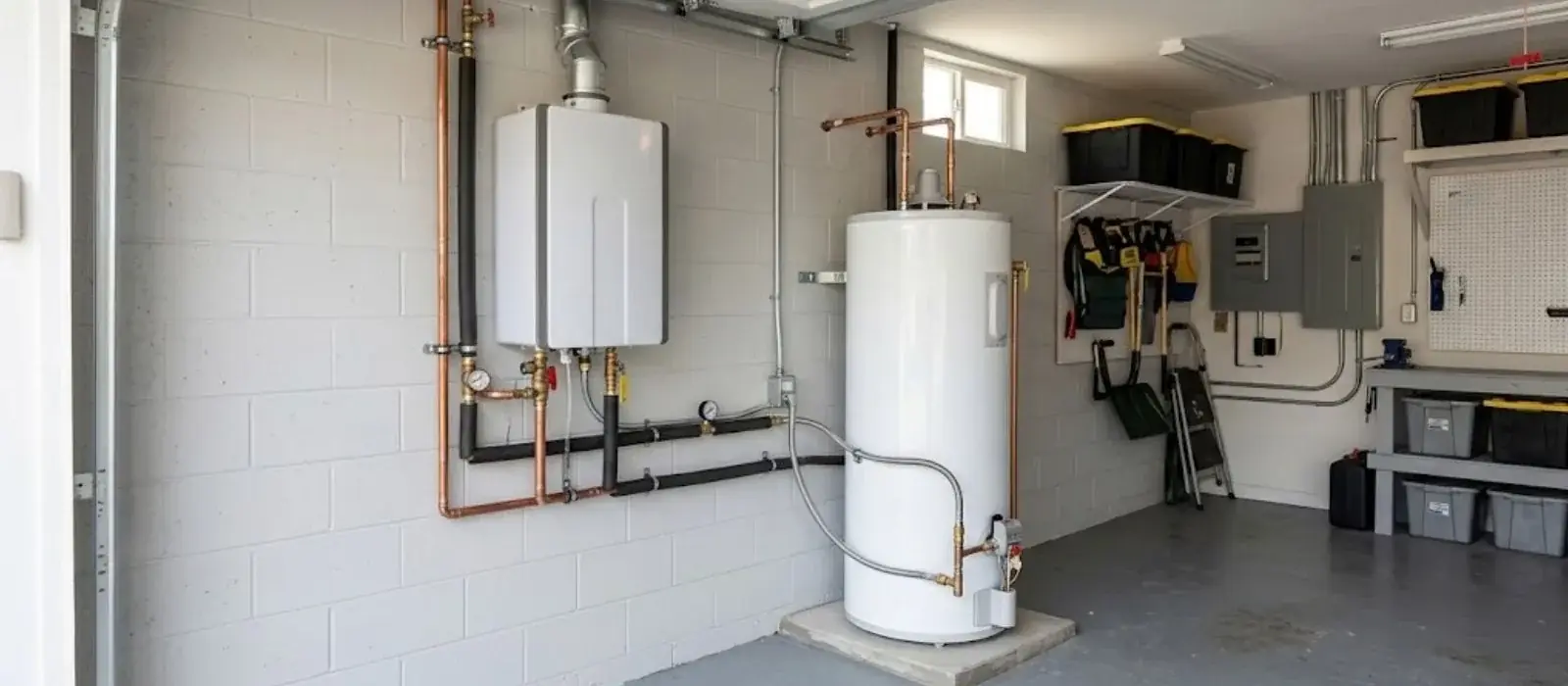
What a correct installation includes
A water heater install is more than setting a tank in place. The plumber connects the cold and hot lines, installs a shutoff valve, fits a temperature and pressure relief valve with a drain pipe to a safe location, braces the tank and checks venting and gas connections on a fuel-burning unit.
Many installs also need an expansion tank, a drain pan under the heater and new flexible connectors. These are small parts that prevent large problems, and we list them on the quote so nothing is a surprise.
- Water supply shutoff valve and new connectors
- Temperature and pressure relief valve with a drain pipe
- Earthquake bracing straps on the tank
- Expansion tank where the system calls for one
- Gas shutoff, sediment trap and leak check on gas units
- Venting inspected and sealed on fuel-burning units
Choosing a type
| Type | Strength | Consider |
|---|---|---|
| Gas tank | Fast recovery, familiar install | Needs venting and a gas line |
| Electric tank | Simple install, no venting | Higher running cost in many homes |
| Hybrid heat pump | Low electric use | Needs space and airflow, and a condensate drain |
| Tankless gas | Endless hot water, compact | Needs sized gas line and venting, and regular flushing |
Tankless units get their own page, tankless water heater service, because installation, repair and flushing differ from tank units.
Moving or upgrading a heater
Relocating a heater from a garage to an exterior closet, or swapping to a larger tank, changes the plumbing, the venting and often the permit picture. Tell the dispatcher what you want, and the plumber checks clearances, gas line size and electrical capacity at the visit.
A planned install is also a good time to add a leak sensor and a drain pan or to check your home's water pressure. High pressure shortens the life of any heater.
Code and permitsRules in Sanger and California
According to California Health and Safety Code section 19211, residential water heaters must be braced against earthquake movement, so a compliant install includes strapping. Plumbing work in California must be done by a licensed contractor, and the plumbing classification is C-36. You can verify any contractor's license on the California Contractors State License Board website.
Whether your install needs a city permit depends on the city and the job. Sanger's Building Division handles building permits, and we advise checking with it before work begins.
Local conditionsHard water and your new heater
Sanger's city wells delivered water with hardness averaging 145.5 ppm in the 2024 report, and some tests reached 330 ppm. Plan for scale. Set a yearly flush on your calendar, ask about a water softener and check the anode rod at each flush. These steps often add years to a tank.
What affects the price of a water heater install
A planned install is priced by the unit and the site. We give a clear price before work starts and list each code item.
Insurance does not pay for a planned install. For your real number, call (855) 575-2890.
Ready to schedule?
Call the line and a dispatcher books a licensed plumber for your water heater installation.
What to do before the plumber arrives
- Shut off the cold water supply to the old heater.
- Turn off the gas or the breaker.
- If you smell gas, leave the building and call the gas utility or 911.
- Keep the area around the heater clear so the plumber can work safely.
Water heater installation questions
Often, when schedules allow. Same-day appointments are available when a plumber is free. For a failed heater, ask for emergency replacement.
Permit rules vary, so ask the Sanger Building Division. We can help you prepare the question.
Relocation changes the plumbing, venting and sometimes the permit. Describe the new spot when you call.