
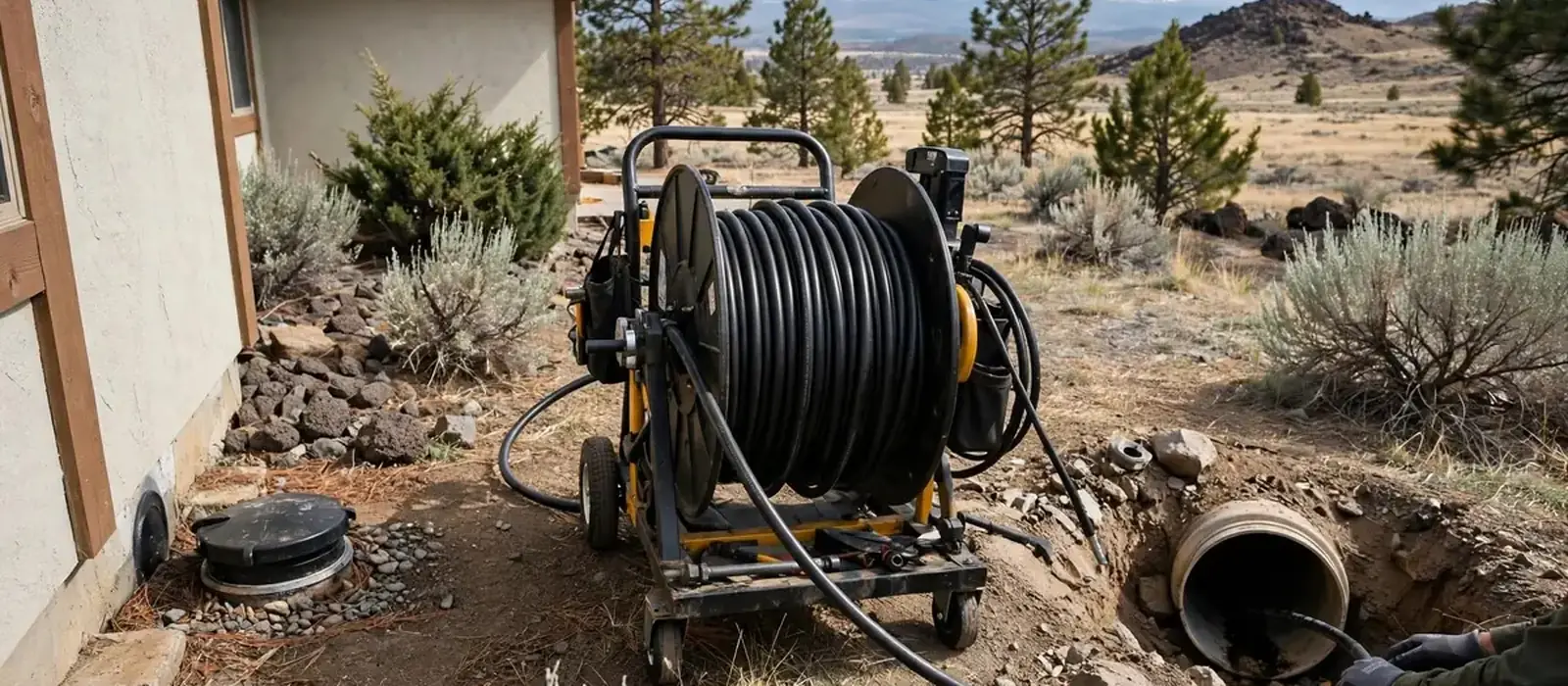
What sewer pipe lining is
Lining is a trenchless repair. A flexible liner soaked in resin is pulled or inflated into the old pipe, then cured so it hardens into a new pipe inside the old one. The result is a smooth, joint-free pipe with a slightly smaller diameter than before.
The method suits pipes with cracks, small holes, root entry at joints and rough walls. It does not fix a pipe that has collapsed, separated badly or sagged enough to hold water.
Before any decisionCamera first, always
No honest recommendation comes before a camera inspection. A camera shows the pipe material, the damage, the slope and any bellies. Ask for the video, and ask the plumber to point out where the damage sits and how long the damaged section is.
Our sewer inspection service records the line so you can see what the plumber sees. The camera also tells you whether the problem is roots, a joint, a crack or a collapse, which are four separate repairs.
Side by sideLining and digging compared
| Question | Lining | Dig and replace |
|---|---|---|
| Yard and driveway disturbance | Small access pits | A trench along the pipe path |
| Fits a collapsed pipe | No | Yes |
| Fits a sagging pipe | No, the sag remains | Yes, the slope is corrected |
| Root resistance | Smooth, joint-free wall | New joints can be sealed well |
| Pipe diameter | Slightly smaller | Same or larger |
| Best used when | Pipe is straight with cracks or joint damage | Pipe is collapsed, offset or sagging |
Pipes that suit lining
Clay, cast iron, Orangeburg and older plastic lines can all be lined if the structure is intact and the route is clean. Pipes with a long straight run and few bends are the best candidates. Several tight bends or a transition between pipe materials makes lining harder.
The pipe must be cleaned thoroughly before lining, usually with a jetting pass. That step matters as much as the liner, because a liner bonded to roots or scale will not last.
Pipes that need digging
- A collapsed section, where the camera cannot pass.
- A belly that holds water, since a liner follows the old slope.
- A pipe that has broken apart or shifted so that sections no longer line up.
- A line where the damage is at a point that cannot be reached from a cleanout.
When one of these is present, sewer line repair by excavation or a partial replacement is the sound option. A plumber who offers only one method should be able to explain why.
Unsure which repair fits?
Call the 24/7 line. A licensed plumber can inspect the line and explain the options.
Questions to ask before you agree
- Can I see the camera video and the exact spot of damage?
- Why is lining or digging the better fit for this pipe?
- How will the line be cleaned before lining?
- What happens at connections to the house and to the street?
- Is a permit or inspection needed, and who handles it?
- What warranty covers the liner and what does it exclude?
Reconnections matter. Side connections, such as a kitchen branch, must be reopened after lining, and a poor reinstatement can restrict flow.
Ask what the finished pipe is rated for and how the liner is tested after curing. A final camera pass should show a smooth, continuous wall with no wrinkles, dry spots or blocked branches. Keep that video with your records, because it documents the condition of the line for a future buyer or the next plumber.
Timing is another question to raise. Lining usually takes less time on site than a full trench, but the pipe is out of service while it cures. Ask the plumber how long water use must be limited and plan laundry and showers around it.
Sewer lines in Sanger
The City of Sanger operates its own wastewater collection system and two treatment plants within city limits, as the city's sewer page describes. The city maintains the public mains, while the pipe from your house to the connection is generally the owner's concern. We have not found the city's lateral responsibility rules published, so ask the city before you begin any work near the street.
About 29 percent of Sanger's homes are more than 50 years old, according to the city housing element. Lines under older streets may be clay or cast iron, the materials where roots and joint wear are most common. If your home is in the original downtown core or around JFK Park or Lincoln Park, expect an older lateral and plan on a camera look.
Before you call anyone to dig
California requires you to call 811 before digging, and the call routes through USA North 811 at least two working days ahead. A plumber handles this as part of an excavation, and you should confirm they do. Marking lines protects gas, power and water services.
Also contact the city if the work touches the connection near the street, since that portion may belong to the city's system.
Signs your line may need attention
- Slow drains in several fixtures at once.
- Gurgling toilets and a sewer smell in the yard.
- Soggy patches or a green strip over the sewer path.
- Repeated clogs in the same line within a short period.
Early signs are a good moment to schedule a sewer line cleaning and a camera look. Many homes near Selma and Reedley have older laterals, so the same cautions apply there.
FAQSewer lining questions
No. Collapsed, sagging or badly offset pipes need digging. A camera inspection decides which method fits.
A smooth, joint-free liner closes the gaps roots use to get in. Roots can still push at weak connections, so reinstated side connections need care.
Ask to see the video, the length of the damage and what is included. A written scope that lists cleaning, lining, reinstatement and a final camera pass is a good sign.
The owner is generally responsible for the pipe on private property. Confirm the exact boundary with the city before work starts.