
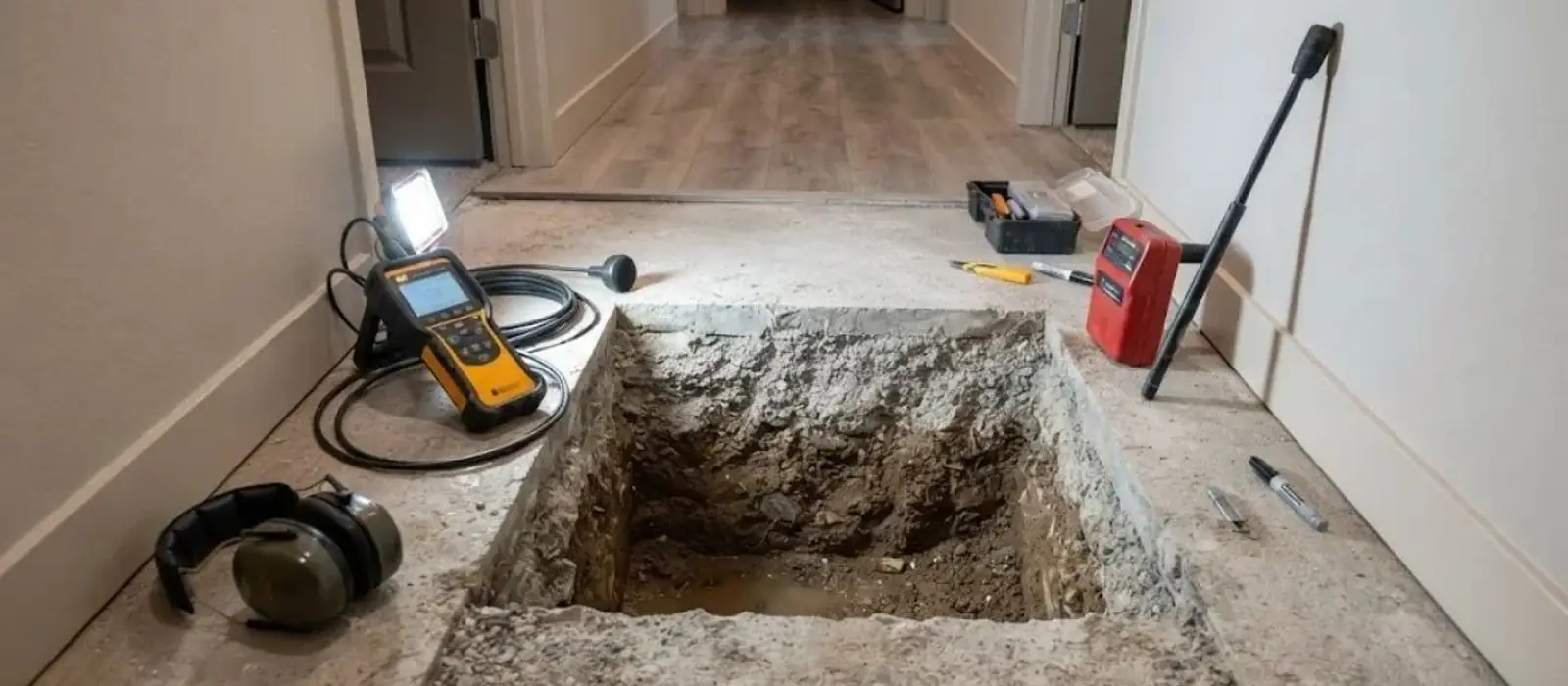
What a slab leak is
In many homes built on a concrete slab, water lines run in or under the concrete, or in the soil just beneath it. A pinhole, a cracked joint or a worn fitting in that line will leak. The water follows the easiest path, which may be soil, a wall or up through the floor.
Because the pipe is buried, a leak can run a long time before it shows. By then, the bill has gone up and the floor may be damp. Pipe type and age both matter, as does the soil around the line.
Seven warning signs to watch for
A warm spot on the floor
A leaking hot line warms the concrete. Bare feet notice it on tile or vinyl long before you see damage.
The meter moves with everything off
A steady turn or a moving low-flow dial means water is escaping. See the meter test in the section below.
Sound of running water
A faint hiss or rush when the house is quiet, with no fixture running, can come from a pressurized leak.
Lower water pressure
A leak steals flow. Pressure that drops without a clear cause can be a sign.
Damp flooring or a musty smell
Carpet that feels damp, wood that cups or tile that lifts points to water below.
Cracks in walls or floors
Wet soil can shift under a slab. New cracks near a corner or a door frame deserve a look.
A high water bill
A bill that rises with no change in habits is often the first sign people notice.
Check the meter before you call
- Turn off every faucet and appliance in the house.
- Look at the meter. If the low-flow indicator moves or the digits change over 30 minutes, you have a leak somewhere.
- Close the main shutoff valve at the house and look again. If the meter still moves, the leak is outside the house.
- If the meter stops with the main closed, the leak is inside the house, and a slab line is one candidate.
This test does not prove a slab leak. It tells you the leak exists and roughly where it is. A plumber pins down the spot with listening gear and pressure tests. For a broader look, see our leak detection page.
What causes a slab leak
Pipes in a slab face constant stress. Copper can corrode from the outside from soil chemistry or from the inside from water chemistry. Movement of the slab from settling or soil moisture changes can rub a pipe against rock or concrete. High water pressure speeds up wear, and a poor joint made at construction can fail decades later.
Not every home has pipes in the slab, since many houses route lines through walls and attics. A plumber can tell you which layout you have.
| Sign | Urgency | First step |
|---|---|---|
| Warm floor spot | High | Shut off the water heater, call a plumber |
| Meter moves, all off | High | Close the main valve, call a plumber |
| Faint hiss in a quiet house | Medium | Run the meter test, call a plumber |
| Musty smell, damp floor | High | Dry the area, call a plumber |
| Higher bill only | Medium | Run the meter and toilet dye tests |
What to do while you wait
- Close the main water valve at the house if water is spreading or the floor is wet.
- Turn off the water heater at the breaker or gas control if a hot line is leaking.
- Stay off wet floors and keep power cords and outlets away from standing water.
- Move rugs, boxes and furniture away from damp flooring.
- Take photos and note the dates for your records.
If you smell gas, leave the house and call your gas utility or 911 first. Water on the floor is not worth risking your safety.
OptionsHow slab leaks are repaired
There are three main approaches. A spot repair opens the floor over the leak, fixes the pipe and patches the concrete. A reroute abandons the leaking line and runs a new one through the attic or walls, which avoids more concrete work. Repiping replaces the whole set of lines when many are failing.
The right choice depends on pipe condition, access and the number of leaks. The slab leak repair page explains each in detail, and the repiping page covers full replacement. Your plumber should give a clear price before work starts.
Slab leaks and Sanger housing
Sanger's housing element reports that about 53 percent of homes are more than 30 years old and about 29 percent are more than 50 years old. We do not have a count of homes in Sanger built on slabs, and the pipe material in your house depends on when and how it was built. Ask the plumber what you have.
Local water chemistry matters too. The city's 2024 report lists hardness averaging 145.5 ppm and chlorine between 0.92 and 1.4 ppm. We cannot say these cause leaks in any one home, but water chemistry is one factor plumbers consider. If you live in Fowler or Selma, ask your own city for its report.
Hear water, see no leak?
Call the 24/7 line to book leak detection.
Why waiting costs more
Water under a slab can erode soil, soak flooring and feed mold. It also raises the bill every day it runs. A small leak caught early may need a modest repair, while a long-running leak can need flooring replacement as well.
Water can also affect structural elements, so a leak that has run a long time may need a foundation check by a qualified professional. That is outside plumbing, and a plumber will tell you when to call one.
Codes and sourcesStandards and sources
Slab leak detection methods such as acoustic listening and pressure testing follow common plumbing industry guidelines. Local water chemistry comes from the City of Sanger's 2024 water quality report, according to the figures it lists for chlorine and hardness.
FAQSlab leak questions
Not safely. Finding the leak and opening concrete need tools and training, and a wrong cut can hit another line.
It varies by policy. Read yours or ask your agent, and keep photos and records of the repair.
Run the meter test, feel the floors for warm spots and listen for running water. A plumber with listening gear confirms it.
No. Leaks grow over time as water and pressure widen the opening.