
What scale does to a tankless heater
Hard water carries dissolved calcium and magnesium. When the water is heated, the minerals come out of solution and form a hard crust on the nearest surface. Inside a tankless unit, that surface is the heat exchanger, where passages are narrow and temperatures are high.
As the crust grows, flow drops and the unit has to work harder to heat the same water. It may overheat, shut down or throw error codes. Left alone, scale shortens the life of the unit and can void a warranty that requires maintenance.
Look for theseSigns your heater needs a flush
Water takes longer to heat
Scale slows the transfer of heat, so the hot water arrives late or runs lukewarm.
Flow drops at the tap
A narrowing heat exchanger limits how much water gets through, especially at the hot side.
Error codes or shutdowns
Many units trip a safety when they overheat or sense low flow. Check your manual for the codes.
Noise from the unit
Rattling, popping or a kettle-like sound can be steam bubbles forming under scale.
Fluctuating temperature
Hot and cold swings during a shower often trace back to a restricted heat exchanger.
| Symptom | Likely scale stage | Action |
|---|---|---|
| Slight delay in hot water | Early scale | Schedule a flush |
| Lukewarm output | Moderate scale | Flush with a pump and descaler |
| Error codes, shutdowns | Heavy scale | Flush now, check sensors |
| Visible white crust at fittings | Hard water exposure | Flush and consider softening |
| Noise from the unit | Scale with steam bubbles | Flush, inspect for damage |
How a flush works
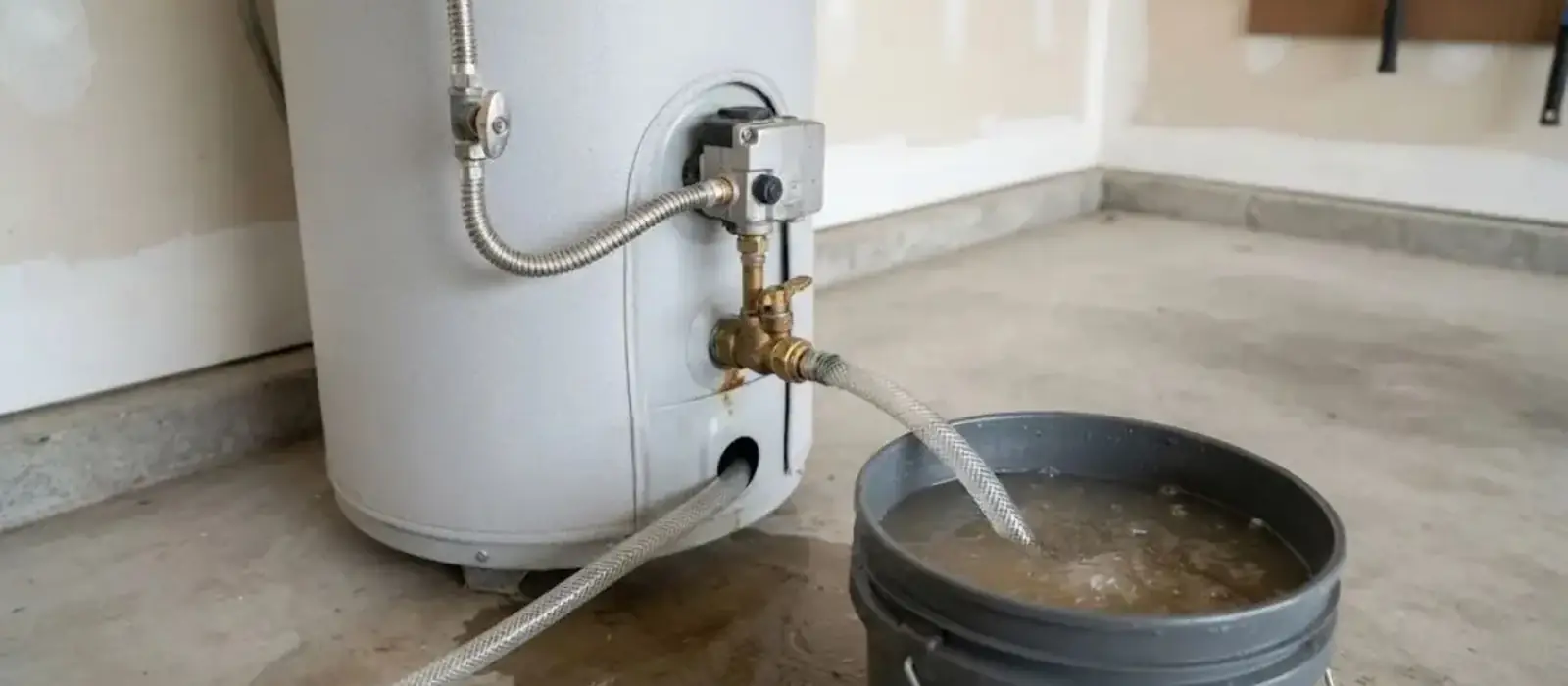
A flush circulates a descaling solution, usually white vinegar or a manufacturer-approved product, through the heat exchanger with a small submersible pump. The acid dissolves the scale and carries it out through the hoses. The unit is then rinsed with clean water.
Most tankless units have isolation valves with service ports that make the flush practical. If yours does not, a plumber can add them, which makes every future flush easier. Always check your manual, because some makers specify a product or a time.
The steps, in order
Power down
Turn off power to the unit. For gas models, also close the gas valve.
Isolate the unit
Close the cold and hot isolation valves, then open the service ports to release pressure.
Connect the hoses
Attach one hose from the pump to the cold service port and one from the hot port back to a bucket.
Circulate the solution
Run the pump for the time your manual states, often around 45 minutes, to loosen scale.
Rinse and restore
Drain the solution, flush with clean water, close the ports, open the valves and restore power.
Safety
Work with gas and venting belongs to a licensed plumber. If you smell gas, leave the house and call your gas utility or 911 from outside.
How often to flush
The right interval depends on hardness and how much hot water you use. Many makers suggest once a year for typical use, and more often in very hard water. If you have a softener or a filter installed, the schedule can stretch out.
Rather than guess, note the date of each flush and watch the symptoms. If performance drops sooner than expected, shorten the interval.
Why flushing matters in Sanger
The City of Sanger's 2024 water quality report lists hardness averaging 145.5 ppm across the tests, with results from not detected up to 330 ppm. That is a wide spread, since the city draws from several wells. Treat your water as moderately hard on average, and very hard on some days.
Sanger summers are hot, so incoming water is warmer and many households turn the temperature setting down, which also slows scale. A water softener or filter can reduce the problem, as the water softener and filtration page explains. Tankless owners in Kingsburg and Parlier should check their own city's report too.
Hot water running cold?
Call the 24/7 line and a dispatcher will schedule tankless service.
When to call a plumber instead
A do-it-yourself flush works for a capable owner with isolation valves. A plumber is the better call if the unit has no service ports, if you smell gas, if error codes persist after a flush or if you see a leak at the heat exchanger.
A plumber also checks the venting, the gas supply and the combustion, which a flush does not cover. See our tankless water heater page for the work we handle, and the water heater repair page if the unit fails outright.
Common mistakesWhat not to do
- Do not skip the isolation valves. Without them, a flush is messy and risky.
- Do not use a descaler that your manufacturer does not approve for the heat exchanger material.
- Do not run the unit while it is isolated or still filled with solution.
- Do not ignore recurring error codes. They point to a problem a flush may not fix.
- Do not forget to rinse. Leftover acid can irritate and can attack seals.
Keep a log with the date, the product and any codes you saw. The log helps a plumber spot a pattern and helps with warranty questions later.
Longer termShould you add a softener?
A softener removes calcium and magnesium before the water reaches the heater. That keeps scale from forming in the first place, and it protects faucets and appliances too. It is a larger investment than a yearly flush, and it needs salt and upkeep.
Some owners start with a yearly flush and add a softener or a scale-prevention filter if they find heavy scale. Others install both together with a new heater.
Codes and sourcesStandards for descaling
Manufacturers' guidelines call for periodic flushing of a tankless heater, and hard water shortens the interval. According to the City of Sanger's 2024 water quality report, hardness averages 145.5 ppm, which the USGS classifies as hard to very hard.
FAQTankless flush questions
Many makers allow it, but some specify their own product. Check your manual before you start.
Slow hot water, error codes, shutdowns and noise are common signs. A plumber can confirm with a flow and temperature test.
Often the opposite. Many warranties expect regular maintenance. Read yours and keep records of each flush.
Not easily. A plumber can add isolation valves with service ports, which makes the flush simple.