
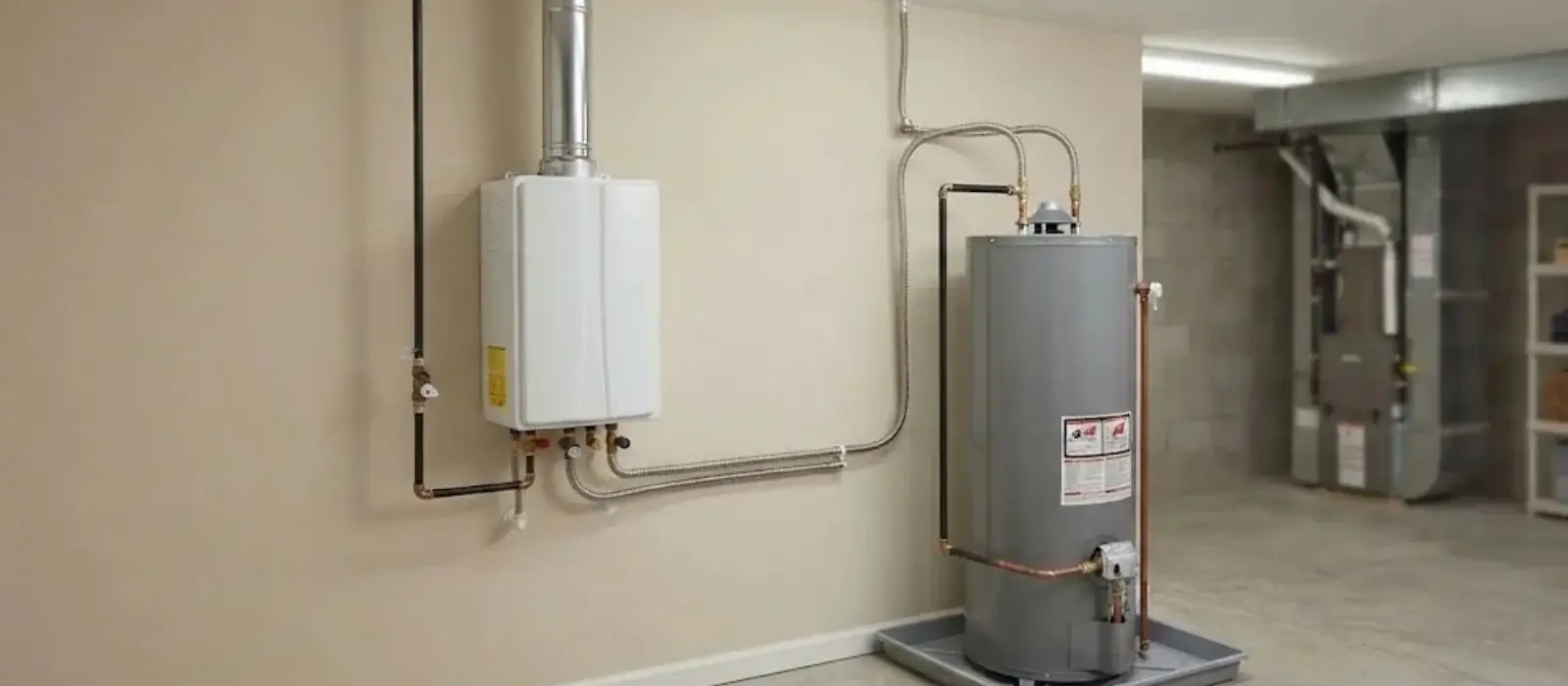
What the relief valve is for
A pressure relief valve is a spring-loaded safety device. When pressure or temperature inside the heater climbs past a set limit, the valve opens and lets water out so the unit cannot build up dangerous pressure. Once conditions return to normal, the spring should close the valve again and the dripping should stop.
Many tankless units hold only a small amount of water compared with a tank, but the valve still matters. Water that turns to steam inside a closed system expands fast. The valve is the last line of defense, and nobody should ever cap it, plug it or remove it to stop a leak.
Five common reasons the valve leaks
High water pressure
Pressure from the street or a stuck pressure regulator can push the system above the valve's setting. The valve then weeps a little each time the heater fires.
Thermal expansion
Heated water takes up more room. In a closed plumbing system with a check valve or backflow device, that extra volume has nowhere to go, so the relief valve takes the hit.
A worn or dirty valve
Mineral grit or corrosion can keep the seat from sealing. An older valve may drip even when pressure is normal, and replacing the part fixes it.
Scale inside the heat exchanger
Hard water leaves scale that restricts flow and raises internal temperature. A scaled unit can overheat the water and trigger the valve. See the descaling steps with a water softener or filter in mind.
A faulty temperature control
A bad sensor or board can let the water run hotter than the setting. That is a repair for a technician, not a do-it-yourself job.
What to do right now
- Look at where the water goes. A steady stream or steam means shut the unit off at once. A slow drip can wait for a call.
- Turn the heater off at the power switch or breaker. For a gas model, also close the gas valve to the unit.
- Close the cold water supply valve to the heater if the leak is more than a drip. Keep a hot tap open somewhere to relieve pressure.
- Put a bucket under the discharge pipe and mop up water on the floor so nobody slips.
- Take a photo of the valve, the data plate and any error code on the display for the plumber.
Gas smell or hot steam
If you smell gas near the unit, leave the house and call your gas utility or 911 from outside. If hot water or steam is spraying, stay clear and shut off power and water only if you can do so without reaching through the spray.
How to tell pressure from a bad valve
A plumber starts with a pressure gauge on a hose bib. Household pressure that sits above the valve's rating points to the pressure regulator or a supply problem. Pressure that jumps when the heater runs points to thermal expansion. Normal pressure with a dripping valve points to the valve itself or to overheating inside the unit.
You can watch for clues without any tools. Does the drip start only after a long shower? That fits expansion. Does it drip all day, even when no hot water runs? That fits high supply pressure or a worn valve. Tell the dispatcher what you saw.
| What you notice | Likely cause | Typical next step |
|---|---|---|
| Drips only while the heater runs | Thermal expansion | Test pressure, consider an expansion tank |
| Drips all day, even when idle | High supply pressure or worn valve | Check regulator, replace valve |
| Water is very hot, unit shuts down | Scale or sensor problem | Descale, test sensors |
| Hissing or steam at the valve | Overheating | Shut off and call a plumber |
| Rust or crust around the valve | Long-term weeping | Replace valve and check fittings |
Why replacing only the valve can fail
A new valve is cheap compared with the rest of the system, so people often swap it and hope. If the real cause is pressure or expansion, the new valve will start to drip again within days. The part is doing its job.
A good repair finds the source first. That can mean setting or replacing the pressure reducing valve, adding a thermal expansion tank, or descaling the heat exchanger. Our water heater repair visits start with a pressure reading for this reason.
Sanger water and your tankless unit
Sanger's water comes from city wells. In the city's 2024 water quality report, hardness averaged 145.5 ppm, with individual test results from not detected up to 330 ppm. Hardness is the main driver of scale, and scale is a common reason a tankless heater runs hot and trips its safety devices.
Fresno County summers are hot, with a typical July high near 98 degrees, so cold supply water is warm and you may run the heater at a lower setting. That is a good habit, because lower settings slow scale growth. If you live in Selma or Fowler, note that each city reports its own water quality, so ask the plumber about your own supply.
Valve dripping or hissing?
Call now and a dispatcher will help you decide whether it can wait until morning.
Should you repair or replace the heater?
A tankless heater with a healthy heat exchanger often runs for many years when it is descaled on schedule. A leaking relief valve alone is rarely a reason to replace the whole unit. The question changes when the heat exchanger itself leaks, when error codes keep coming back or when the unit is already well past its expected life.
If a replacement makes sense, the plumber walks through sizing, venting and your gas line. The water heater replacement page explains what that visit involves.
Codes and sourcesCodes for relief valves
The UPC-based California Plumbing Code requires a temperature and pressure relief valve on water heaters, and the manufacturer's guidelines describe the drain line it must have. A valve that drips should be tested and replaced, never plugged.
FAQTankless relief valve questions
A rare drop during a very hot spell can be normal. A steady drip or a stream is not normal and should be checked.
No. The discharge pipe must stay open so the valve can release pressure safely. Capping it defeats the safety device.
A licensed plumber can test pressure, replace the valve and fix the cause. Call the 24/7 line and a dispatcher schedules a visit in Sanger or the nearby towns.
It helps if scale is the cause. If pressure or expansion is the cause, descaling will not stop the drip on its own.