
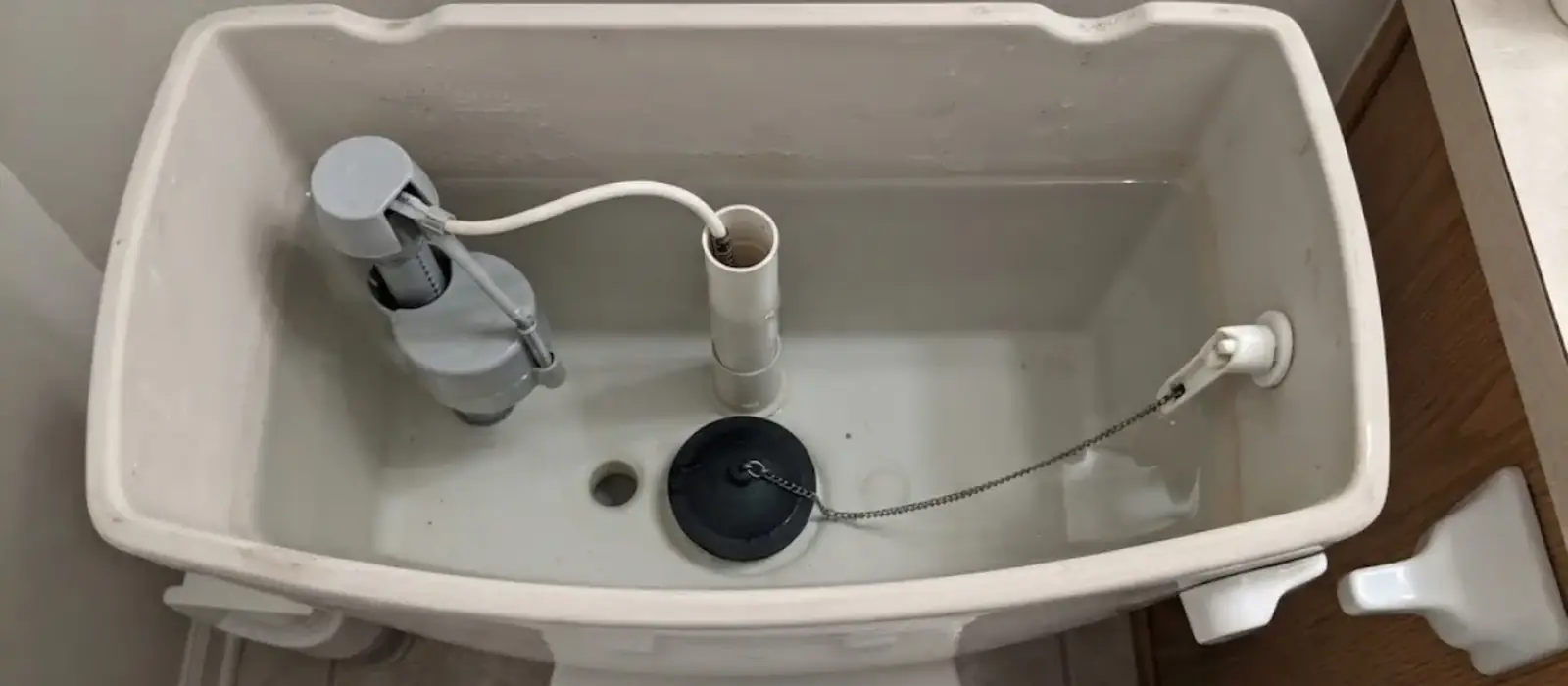
Lift the lid: what is inside a toilet tank
The tank holds water for one flush and a few moving parts that control it. The fill valve refills the tank after each flush. The flapper is a rubber seal at the bottom that lifts when you press the handle and drops back to hold the water. The overflow tube is a safety drain that sends extra water into the bowl.
A chain links the handle arm to the flapper. If any of these pieces wears out, bends or sticks, the toilet will run, leak into the bowl or flush weakly.
Which part has failed?
| Symptom | Part to suspect | Why it happens |
|---|---|---|
| Toilet refills on its own every so often | Flapper | Rubber hardens or warps and leaks into the bowl |
| Constant hissing or running | Fill valve | Seal worn or float set too high |
| Water spills into the overflow tube | Fill valve or float | Water level set above the tube |
| Handle feels loose, nothing happens | Chain or handle arm | Chain slipped or the arm is broken |
| Weak flush, quick drop in water | Flapper chain too tight or flapper closes early | Poor chain length or worn flapper |
| Water on the floor around the base | Tank bolts or wax ring | Gaskets dried out or the seal failed |
The dye test for a leaking flapper
Put a few drops of food coloring in the tank without flushing. Wait fifteen minutes. If color shows up in the bowl, the flapper is leaking even when the toilet seems quiet. This small leak refills the tank at all hours and wastes more water than most people expect.
Flappers wear for many reasons. Chlorine tablets dropped in the tank make the rubber brittle. Mineral buildup keeps the seal from sitting flat. An old flapper simply loses its shape.
Fill valves and the sound of a leak
A fill valve that never quite shuts off makes a faint hiss. Early on the sound is easy to miss. Over weeks the tank may creep upward and spill into the overflow tube. Replacing the fill valve takes a plumber very little time, and the new unit is often quieter than the one removed.
Match the valve to the tank. Some tanks have a corner shape, some sit low and some mount the fill valve high. Buying the wrong style leads to a valve that will not seat or leaks at the nut.
When the problem is not in the tank
Water on the floor can come from the supply line, the shutoff valve or the base seal, not the tank. If you notice a damp subfloor, a rocking toilet or a stain on the ceiling below, the wax ring or flange may be damaged. Those repairs are more involved and often need the toilet lifted.
A slow drain or gurgling when the toilet flushes points to the drain line. For that, see drain cleaning rather than tank parts.
Toilet running or leaking?
Call the 24/7 line. A dispatcher schedules a licensed plumber and you get a clear price before work starts.
Safe steps to try first
- Turn the shutoff valve behind the toilet clockwise to stop a running toilet.
- Lift the tank lid and check that the chain has about a half inch of slack.
- Look at the water level against the mark inside the tank or the top of the overflow tube.
- Wipe the flapper seat with a soft cloth to remove grit.
- Take a photograph of the tank parts so the plumber can bring matching ones.
Do not use drain cleaner in a toilet. It does not fix tank problems, and it can damage seals and hurt anyone who gets splashed.
Repair a toilet or replace it?
A tank rebuild with a new fill valve and flapper is the usual fix. If the porcelain is cracked, if the toilet clogs often or if a long-ago model flushes poorly, replacement may be a better choice. A plumber can look at the age and the condition before suggesting either path.
The toilet repair page lists the repairs we handle, and plumbing installation covers new fixtures.
Water saving and tank parts
Toilets are one of the largest water uses in a home, and a leaking one adds to that use around the clock. Replacing worn tank parts is among the cheapest ways to cut waste. Some older toilets use more water per flush than current models, and a plumber can tell you the flush volume from the markings on the tank or bowl.
Swapping the tank parts keeps a good toilet working. Replacing the toilet itself makes sense when it is cracked, clogs repeatedly or flushes poorly after repair.
Signs the toilet needs more than new parts
- Cracks in the tank or bowl, even fine hairline ones.
- A wobble at the base that returns after tightening the bolts.
- Stains on the floor or ceiling below the bathroom.
- Repeated clogs even with a plunger and a clean drain line.
Toilet tanks and Sanger water
Sanger's water comes from city wells that are treated before delivery. The 2024 water quality report shows chlorine residuals from 0.92 to 1.4 ppm in the distribution system, and that range is normal for treated water. Chlorine at that level is not strong enough to wreck a flapper quickly, but chlorine tablets in the tank are far stronger and shorten the life of rubber parts.
Hardness averaged 145.5 ppm in the same report, with a range up to 330 ppm. Mineral scale can keep a flapper from seating, so a toilet that runs only now and then may just need its flapper seat cleaned. Homes in Fowler and Parlier draw on their own city systems, so conditions vary by town.
Standards for toilet parts
According to the UPC-based plumbing code, a toilet tank needs a working overflow path and a fill valve that shuts off fully. Universal replacement kits are made to those standards, but check the part against your toilet before buying.
FAQFrequently asked questions
That is called phantom flushing. Water is leaking slowly past the flapper, and the fill valve refills the tank when the level drops. Replacing the flapper usually ends it.
Many homeowners do, and a fill valve or flapper is a manageable project with the water shut off. If the parts will not budge, if the tank bolts leak or if you are unsure, a plumber can finish it safely.
It varies with water quality and use. Flappers and fill valves tend to wear out before the toilet does, so replacing both at once is common.
It can. A toilet that leaks constantly uses water around the clock. The dye test above is the quickest way to check.